Category: Places
- Architecture
- Art
- Brno
- Christmas
- Culture
- Czech-Trace-in-Britain
- eShop
- History
- Icons
- London
- Moments
- Moravia
- People
- Places
- Prague
- Theatre
- Třebíč
- Uncategorized
My Piece of History
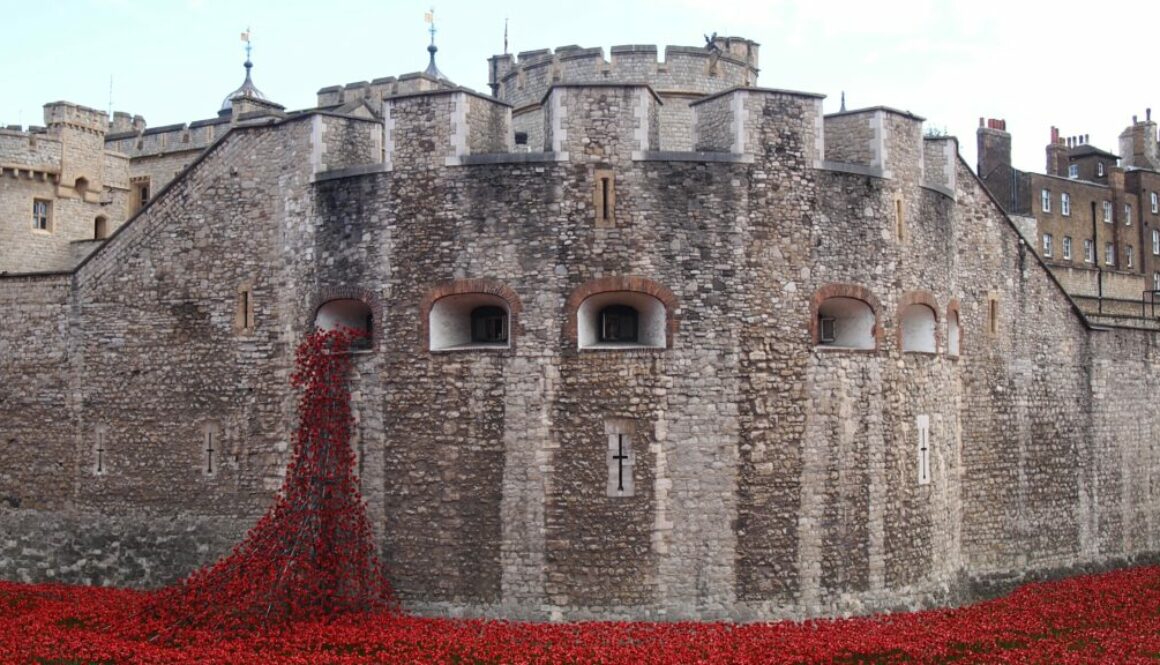
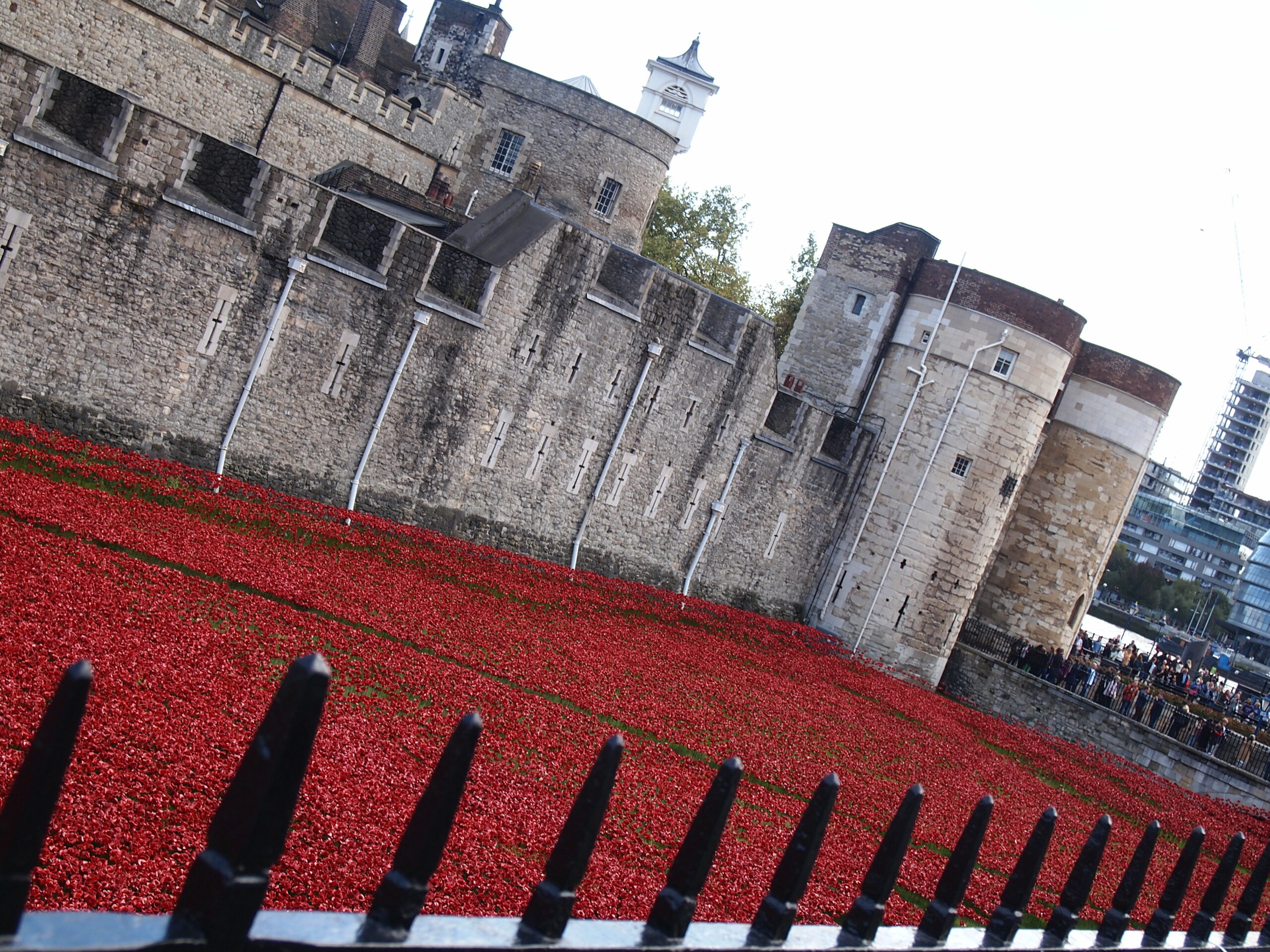
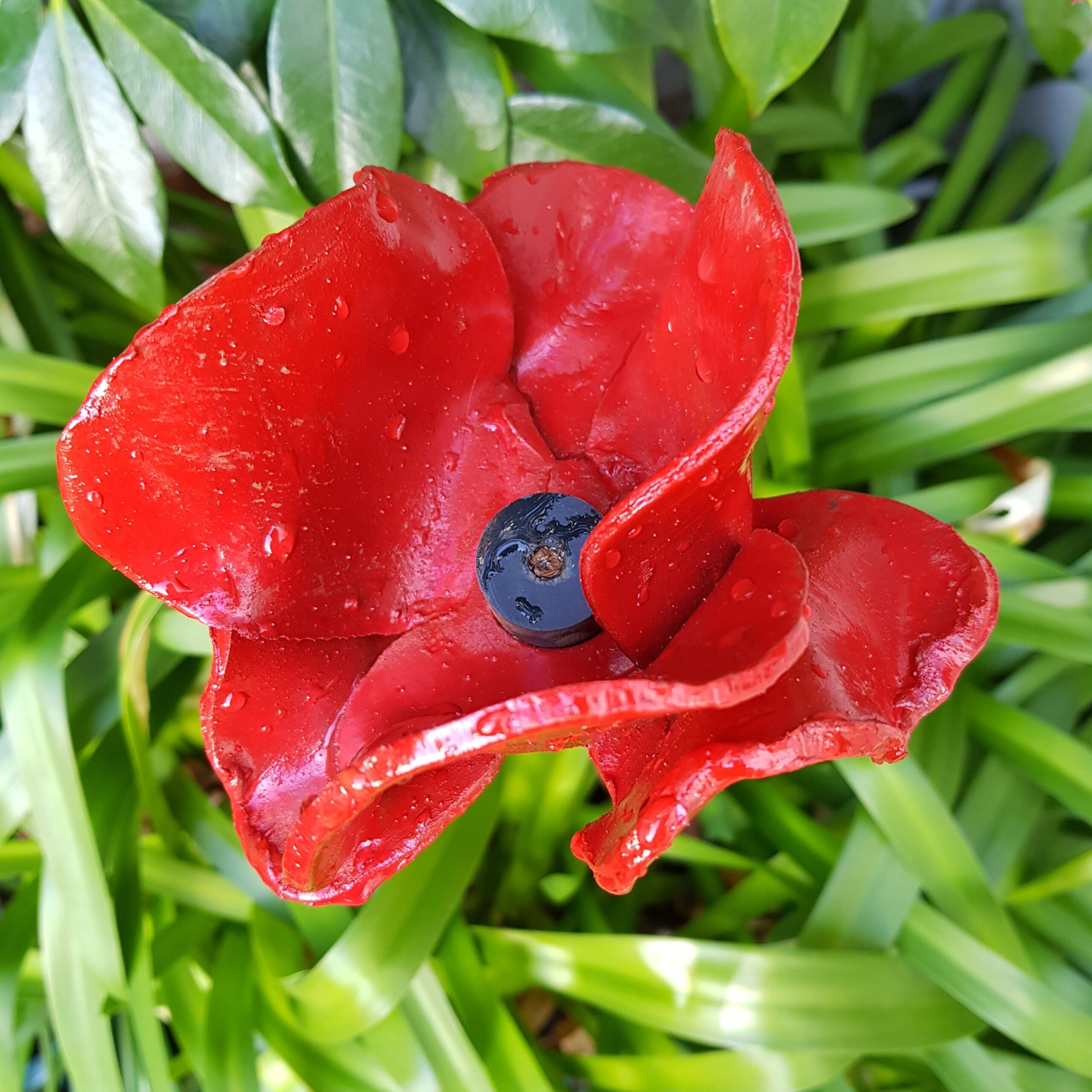
The evolving installation consisted of 888,246 hand-made ceramic poppies, progressively planted, one by one, over a period of several months, by volunteers from all over the world. The authors were Paul Cummins, ceramic artist & Tom Piper, theatre designer.
Even on that final day, the blood red river of poppies was still growing.
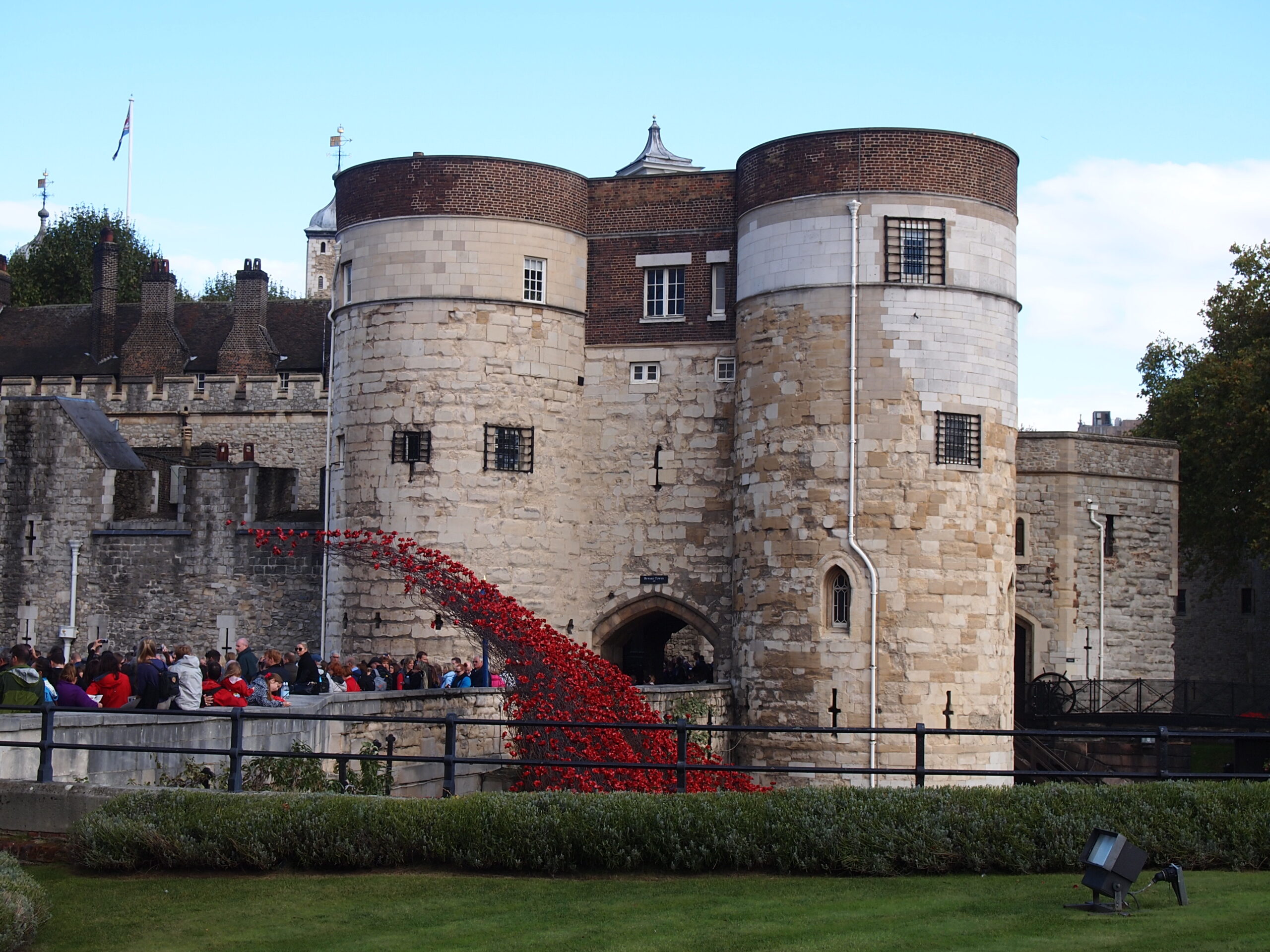
The display was spectacular; the flood of bright red blooms wrapped the Tower of London, poured from its walls, and filled the entire moat.
There were thousands on that day, watching, in silence. Stunning and theatrical as it was, it was also profoundly sad. Each poppy was a poignant reminder of one life lost in WWI.
Later that year, the ceramic poppies were offered for sale to raise funds for several charities supporting ex-military staff. I applied, and, just before Christmas 2014, my own piece of history arrived.
The Codebreakers
Earlier this year, we visited Bletchley Park. A trip long overdue, considering that we live some 30 Minutes away!
I was not quite sure what to expect – apart from ‘the battle against the machines’ of course – and I had no idea at all how powerfully this place would resonate with me. And it still does.
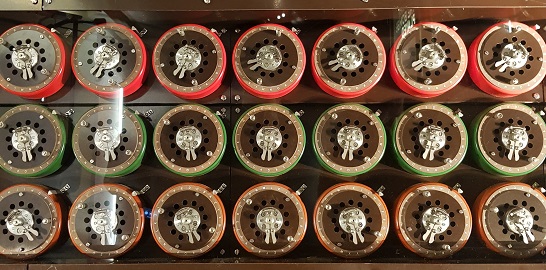
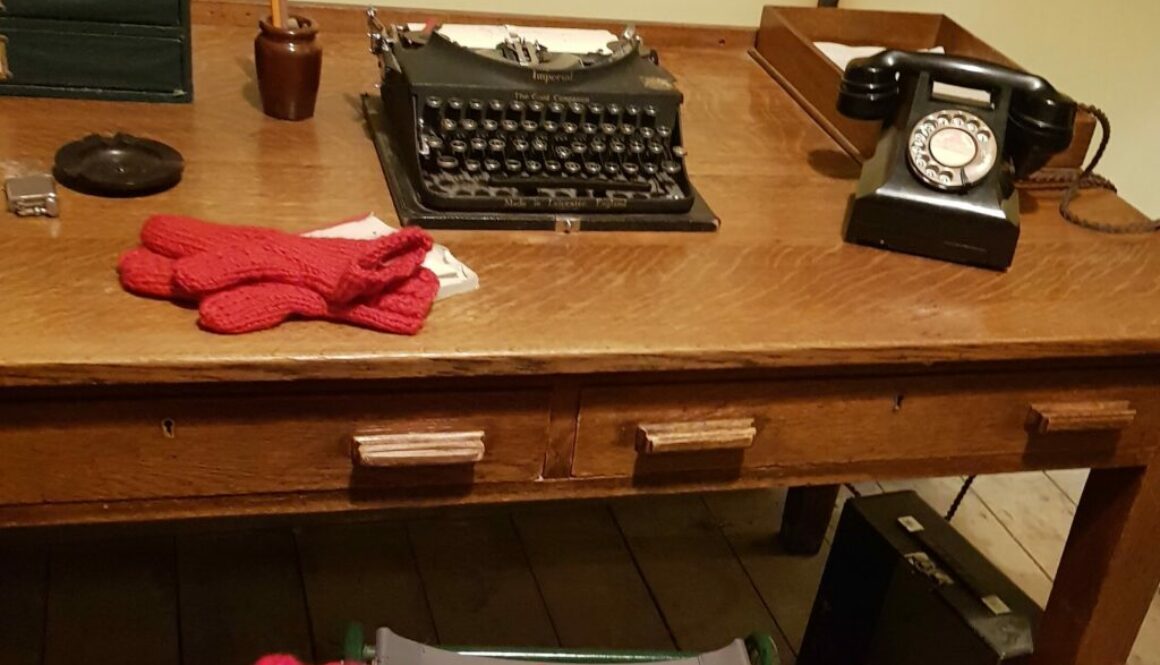
It was in the opening exhibition dedicated to codes and ciphers in wartime communication, when I realised that this place is, first and foremost, about people. The ‘work tools’ on display – the decoding stencils, handwritten notes and transcripts, files, and logbooks – they all spoke of meticulous, exhaustive work. Yes, it was the time when ‘cut and paste’ meant scissors and glue!
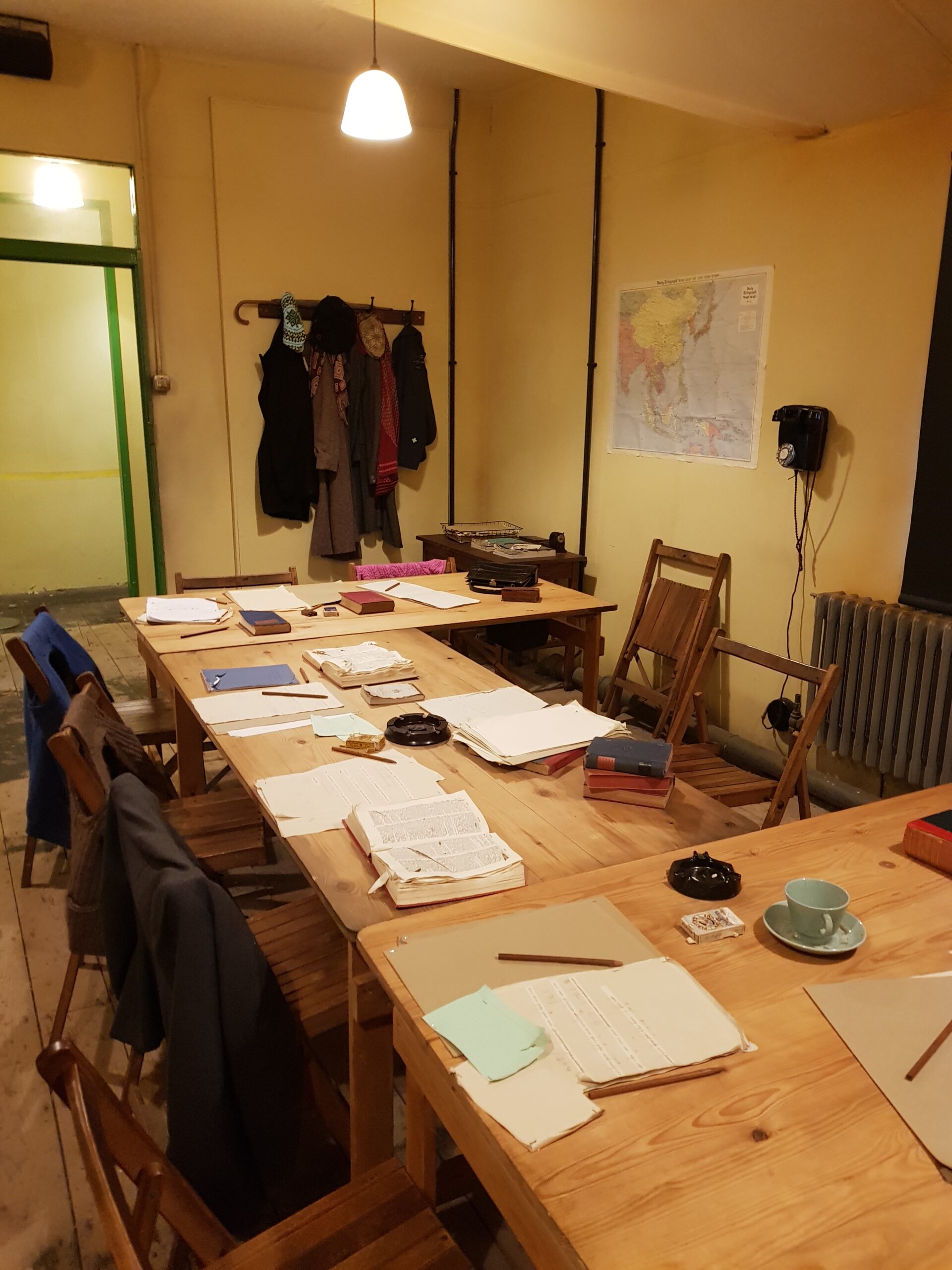 Further on, personal items such as hand-knitted mitts, scarves, cardigans and hats, pipes, ashtrays, pencils and notepads, telling reminders of the conditions the codebreakers worked in – in the dim, confined and spartan huts – producing ultra-intelligence that it said to have shortened the WWII by several years.
And afterwards, there was silence.
When the operation at Bletchley Park closed in 1946, the codebreakers packed their belongings and left and returned to their lives, not being allowed to share even within their closest families what it was they were doing there; all information about the operation in Bletchley Park was classified until mid-1970s.
It was such a humbling and emotional experience! These days – and I am certain this applies to both pre- and after the lockdown – we take so much for granted; we feel entitled. Our experiences seem non-existent until shared and acknowledged (read liked) on social media.
It certainly helped me to put things into perspective.
Back home, I decided to find out more about the people of Bletchley Park. As a linguist and practising translator, I felt professional pride and connection to the linguists at Bletchley Park, who were of such importance for the success of the operation.
That is hardly surprising though. I was intrigued what other professionals were there.
At the beginning, the recruitment aimed at ‘Cambridge and Oxford professor types’, and the list of academics indeed contains a historian, a mathematician, an Egyptologist, a logician, and an astronomer. As the operation grew, Bletchley Park welcomed a fascinating mix of professions from different walks of life. As one would expect, there were cryptologists, cryptanalysts, as well as military, naval and intelligence officers. And of course, technical talent such as engineers and topologists.
Interestingly, there were also many creatives – artists, writers, designers, biographers, a poet, a garden and landscaping historian, a journalist, an actress, a composer, a radio dramatist. Also, a solicitor, a schoolteacher, and a philatelist. Not to forget several chess players and chess champions.
What a fascinating mix of skill and talent!
It was only a natural next step that I wanted to find out whether there were any Czechs (or Slovaks) at Bletchley Park at all.
And this is how I found her!
Dorothea Karoline Fuhrmann was born in 1917 in Brno, Czechia, into a wealthy Jewish family of textile manufacturers.
When her parents divorced in mid-1920s, Dorothea and her brother Robert relocated with their mother to Vienna, where she began training as a theatre designer at Kunstgewerbeschule. Their father was the only member of the family to remain in Brno, and later died in Auschwitz.
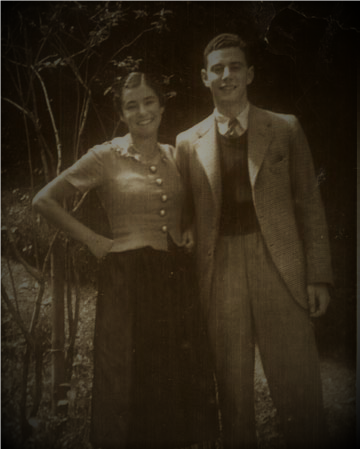
In 1938, Germany annexed Austria. At that time, Dorothea designed stage decorations for the production of Midsummer Night’s Dream, but when she arrived in the theatre for the opening night, the notice on the entrance door said: No Jews.
She never saw her work on the stage.
Dorothea fled to London, which was only possible because she had a Czech passport thus did not need the permission from the Nazi regime to travel.
She continued her studies at the Reimann School in London, but then the WWII intervened.
Dorothea joined the WRNS (Women’s Royal Naval Service, known as the WRENS) and because she spoke foreign languages, she became a radio intelligence officer (‘the listener’). She intercepted coded messages from the German naval forces, thus becoming key part of the broader Bletchley Park Operation.
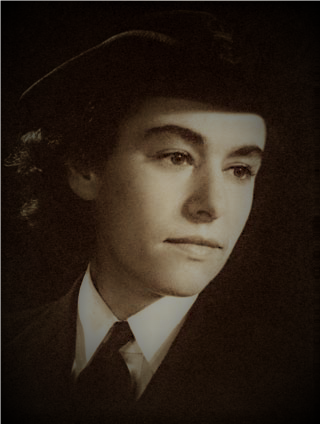
In 1940 she married Leonard Klatzow, a South African physicist, who tragically died in 1942 in a plane crash.
After the WWII, Dorothea pursued her career as a designer and worked at the design studio of the Central Office for Information, producing government campaign posters, amongst other the famous ‘Coughs and Sneezes Spread Diseases’:
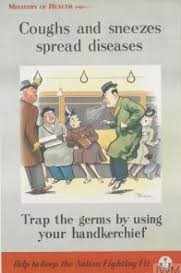
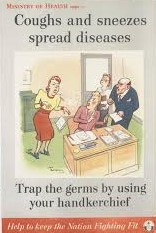
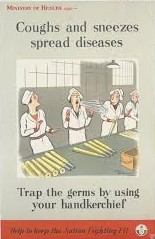
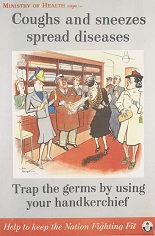

This is when she created her professional name: once asked to sign her artwork, she realised that both her maiden and married names were too difficult to recognise in the UK, decided to use her initials D.K.K. instead and created herself a professional name – Dorrit Dekk. Her mother, a Dickens enthusiast, has always called her Dorrit.
After a brief interlude in Cape Town, she returned to London in 1950 and established herself as a freelance designer, printmaker, and painter.
The milestone commission was a design for the Travelling Section of the Festival of Britain in 1951, a national exhibition and fair that attracted millions of visitors across the UK. Dorrit created a mural representing popular British sports, games and pastimes called People at Play.
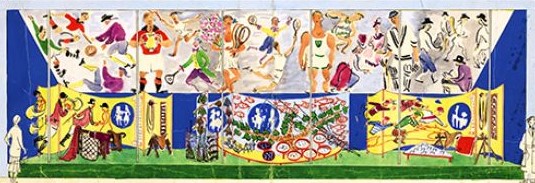
With this piece of work, Dorrit entered the British design world. She has always been proud to be part of the 1951 festival.
She gradually built her own successful design practice and in 1956, she became a fellow of the Society of Industrial Artists (today Chartered Society of Designers).
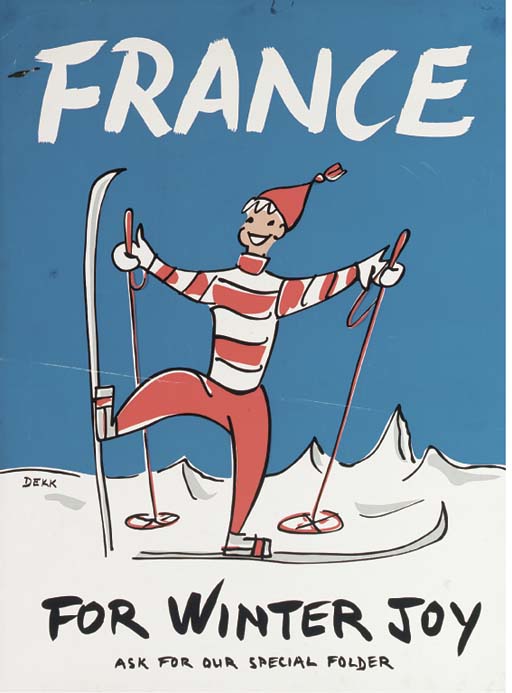 Dorrit became known as the ‘travel queen’ through her work for Air France and P&O. However her work spanned from book covers and illustrations (Penguin and The Tatler were her clients) to advertising for London Transport, British Rail and Post Office savings bank. She considered herself art designer rather than fine artist.
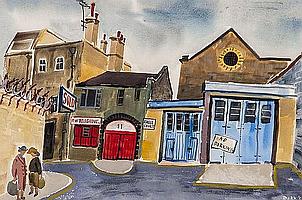
Dorrit Dekk became one of the most influential and successful commercial graphic designers in the post-war UK. Her main medium was collage which she used in her posters as well as paintings. For her quirky landscapes and urban scenes she used gouache.
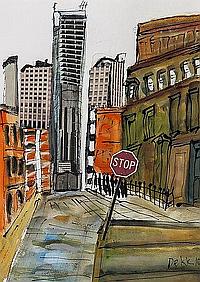
She continued to create pieces of abstract and figurative art as well as her favourite collages even after a stroke she suffered in 2001. Housebound and on a wheelchair, she enjoyed receiving young students of art in her studio, for whom she was an admired role model. Famous for her eccentric stripy socks, and loved for her infectious spirit, her passion for all things art and architecture, and for her sharp wit, Dorrit Dekk was one of a kind. She died in London in 2014 at the age of 97.
■■■■■
What a journey, what an unexpected discovery! Little did I know that a day’s trip to Bletchley Park will lead me to discover this connection to my hometown Brno, and that I will get the opportunity to ‘meet’ Dorrit Dekk, a brilliant artist and a beautiful person, in and out. I look forward to continuing learning about Dorrit’s career and art, and about her full, eventful life. She was a true fighter; in her own words, she seemed to be completely indestructible!
This is how to do it!
In 1928, an unparalleled event took place in Brno. To mark the 10th anniversary of the re-establishment of the Czech independent state (28th October 1918), Brno hosted An Exhibition of Contemporary Czechoslovak Culture.
Tomáš Garrigue Masaryk, the first Czechoslovak president, was the patron of the exhibition which lasted from May to September. It was a demonstration of the creative intellectual potential of Czechs and Slovaks and a proud showcase of cultural, technological, industrial, and agricultural achievements of the young republic. It is worth mentioning that in the 1920s, Czechoslovakia ranked amongst the 10 most developed countries in the world. It was a time of hope and optimism.
The tradition of annual markets and international trade shows in Brno dates back to the 13th century. They boomed particularly in the 18th and 19th centuries when Brno was an important industrial hub, particularly for the textile industry.
However, in order to be able to host such a huge event, the city needed a dedicated exhibition centre. After 30 years of campaigning and planning, the permanent exhibition grounds – Brno Exhibition Centre – was built in 1927-1928. The complex is situated on a vast platform between the river Svratka and the hillsides of the well-off residential and villa quarter.
Leading architects and engineers were invited to design individual halls and the layout of the entire area. The modernist style manifested the spirit of the young Czechoslovak society.
 This is what Karel Čapek wrote in the summer of 2018:
‘What a surprising show, generous, pure, unequalled by any other show I have ever seen. One cannot but praise the principle of unity; a shared purpose laid out this magnificent space and all designers respected the same architectonic style. The result – precision and pure harmony.
This is I think the ultimate cultural insight offered to us by this exhibition of contemporary culture: when designing, building and creating, one has to be brave and embrace radical and disciplined unity. This is the spirit of modernism, contemporary, clear and concrete.
Having seen this enormous and successful manifestation, I say we should adopt this in any enterprise and endeavour and – this is how to do it!’
In the 1920s and 1930s, Brno was one of the hotbeds of modernist and functionalist architecture in Europe. Villa Tugendhat, designed by Mies Van Der Rohe, is the most famous building from this period. Alongside The Glass House, Brno Exhibition Centre offered a compact collection of modernist architecture, pavilions set in parks, relaxation areas and water features, inter-connected with generously laid out boulevards. With restaurants, cafés and a theatre, it was more than a mere exhibition centre, it was a city of its own.
We were lucky to be able to visit the site in 2018, for the centenary celebrations of the Brno Exhibition Centre.
Free from bombastic corporate installations, omnipresent advertising and crowd pleasers, the airy halls stood there, in hot mid-June sun, impressive, bold, beautiful examples of modernist architecture.
Here are some of our highlights:
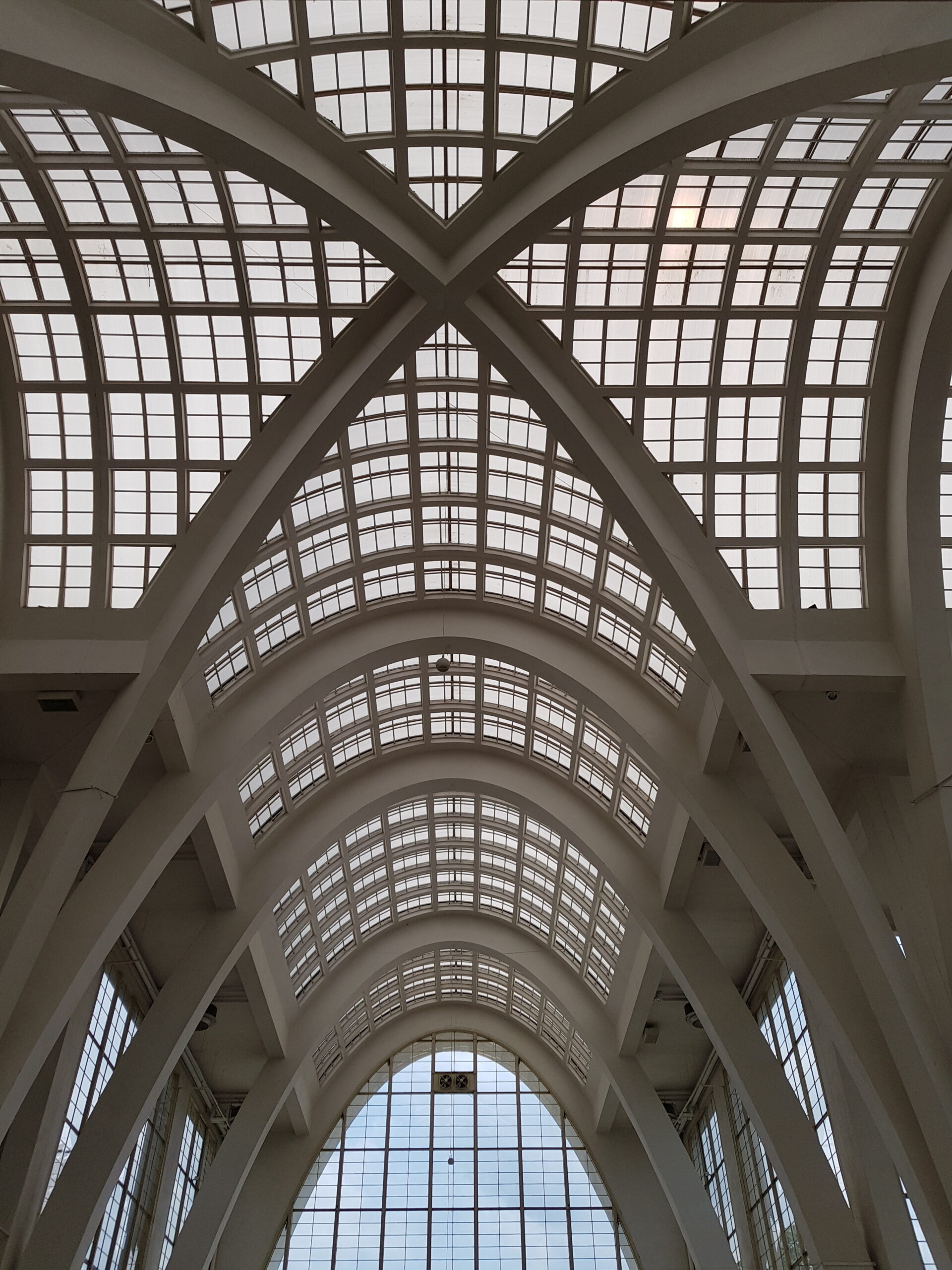
Hall A (Pavilion of Industry and Trade) is the central hall of the entire complex; it dominates the entrance area.
The designers were Josef Kalous and Jaroslav Valenta.
The construction only took incredible 230 days!
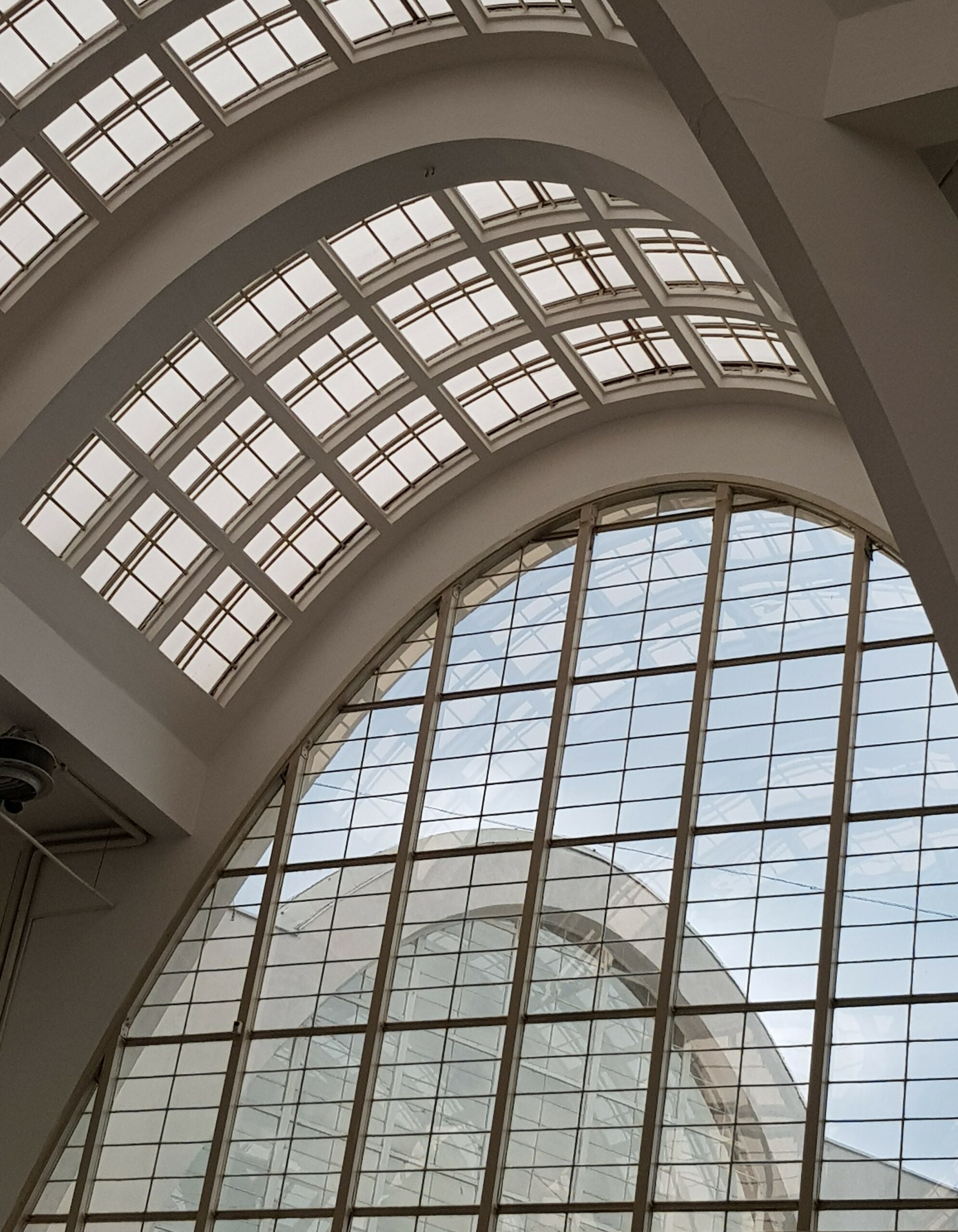
Its characteristic features are parabolic arches supporting the glass ceilings, and a central rotunda, which today is a multi-functional space hosting congresses, fashion shows, concerts, performances and social events.
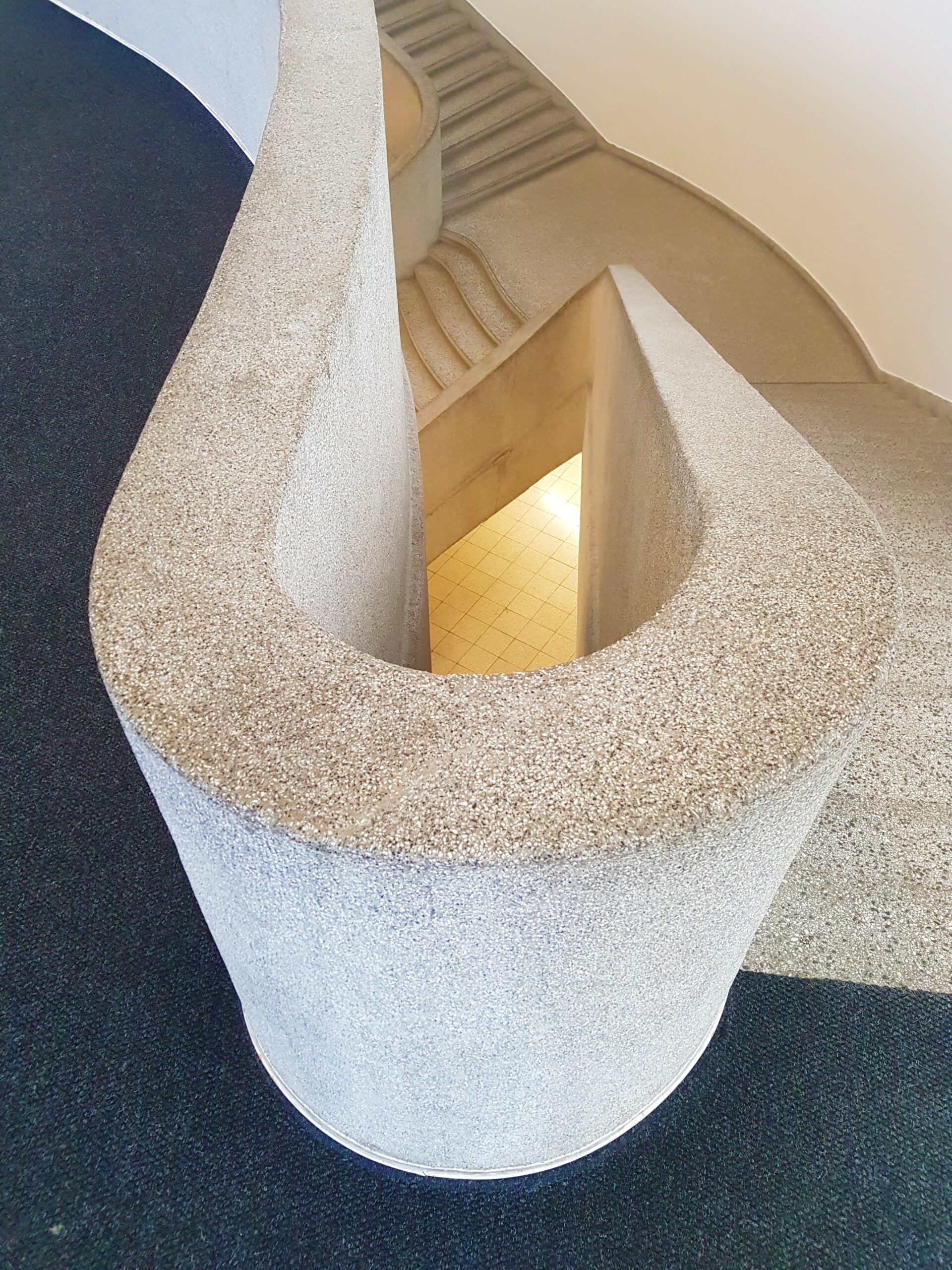
Overhanging staircase at the gallery, with its winding, fluid forms, demonstrates the potential of ferro-concrete structures.
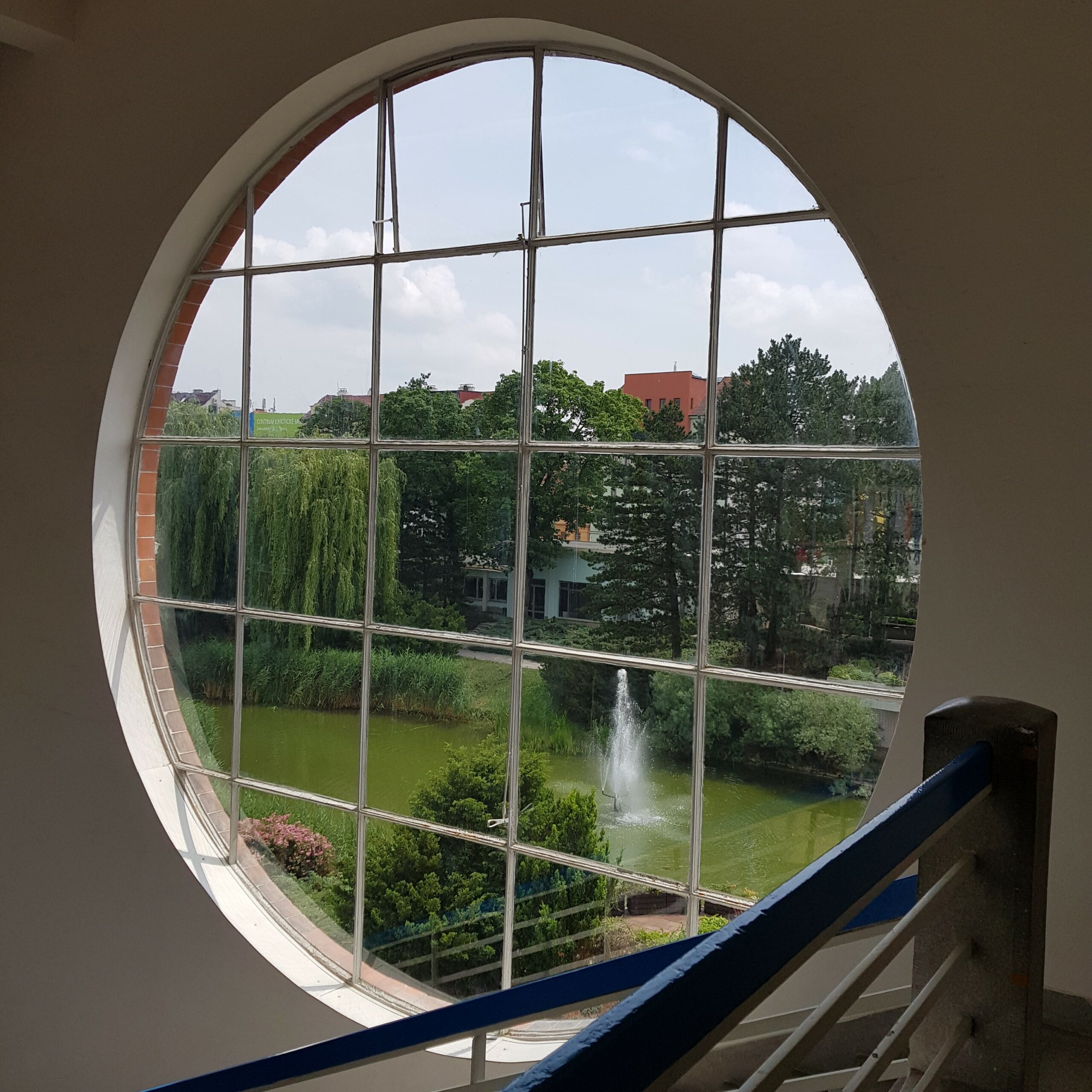
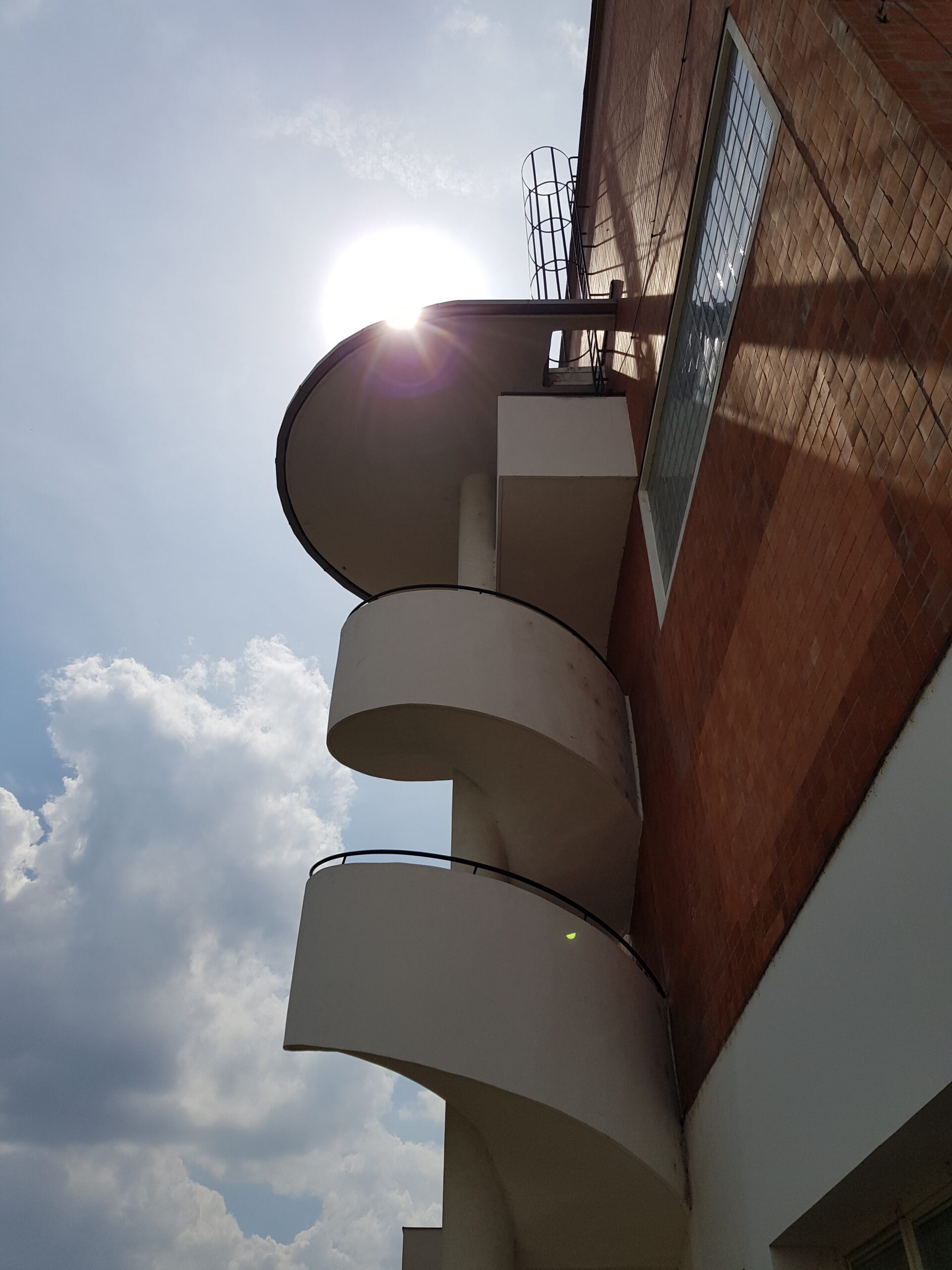
Moravia Pavilion, designed by Bohuslav Chroust, is situated on a south-western axis of the complex, to the left from the entrance, next to the Brno Pavilion (designer was Bohuslav Fuchs).
Both have ferro-concrete structures and the same ledge height and are clad with dark red tiles.
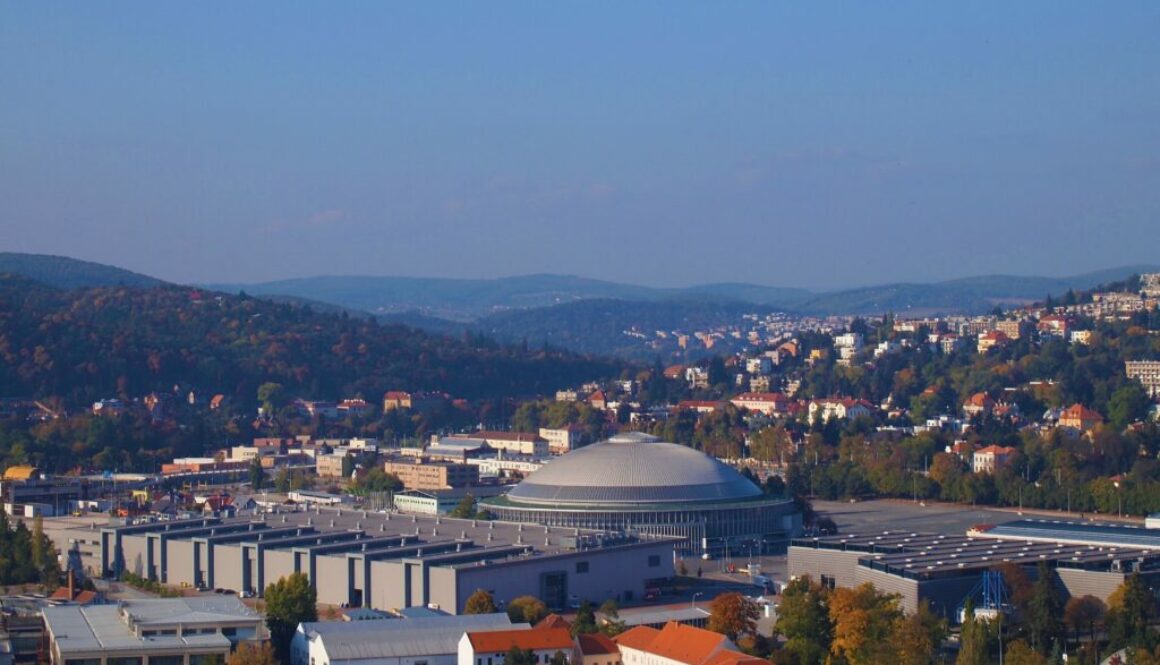
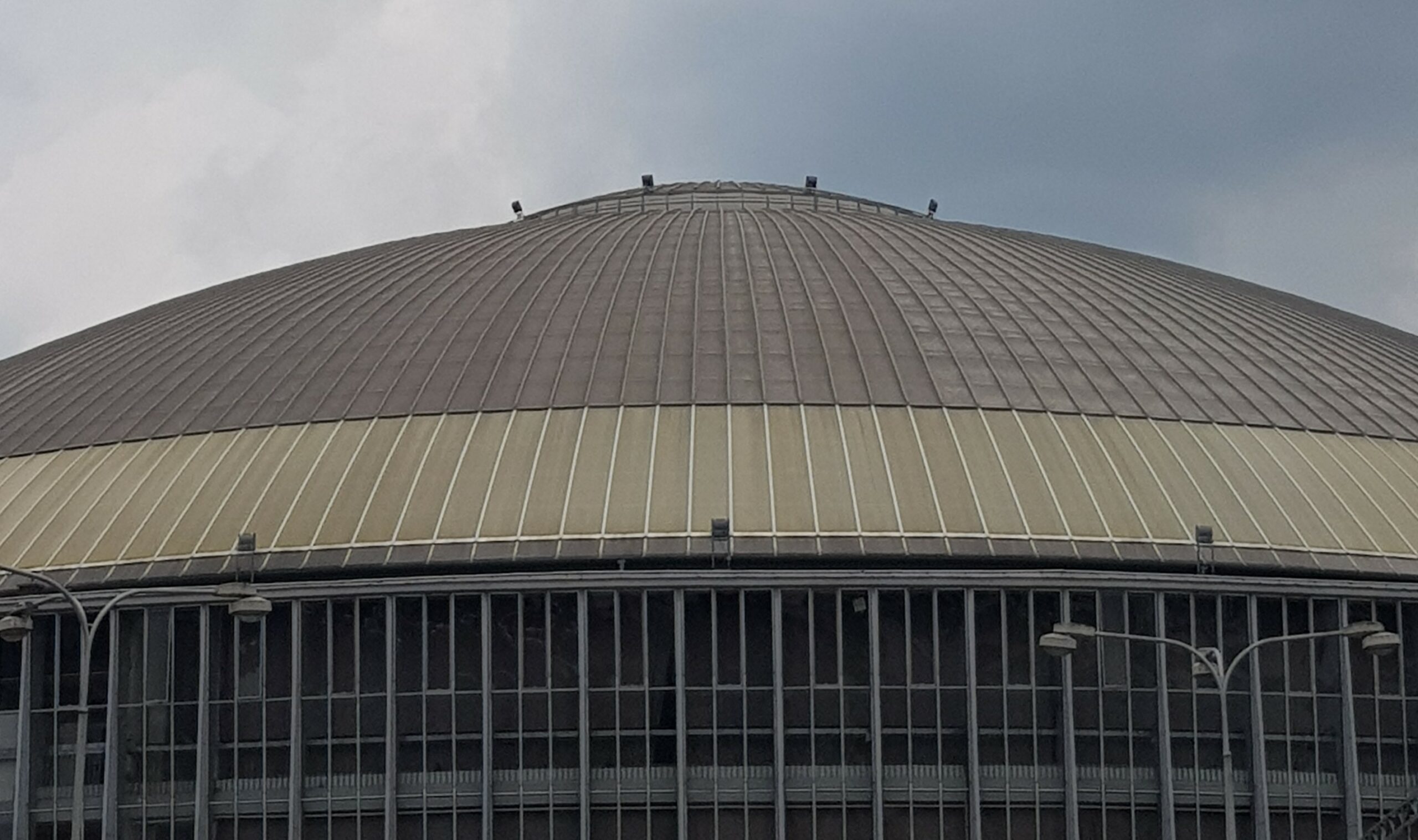 Hall Z is one of the later additions. It was built in the early 1960s in the Brussels style, and it was designed by Ferdinand Lederer, Zdeněk Alexa and Zdeněk Denk. It is a vast round construction in steel, ferro-concrete and glass, with 124m diameter, two broad exhibition galleries running alongside its inner walls and a characteristic cupola roof that has become another dominant of the exhibition complex. The highest point of the cupola is in 30m height.
Today, Brno Exhibition Centre is only open to the public during international trade fairs and exhibitions, and for concerts, cultural and social events. Many more halls have been added over the years, respecting the modernist and functionalist heritage.
In Brno, modernism lives on.
The Glass House
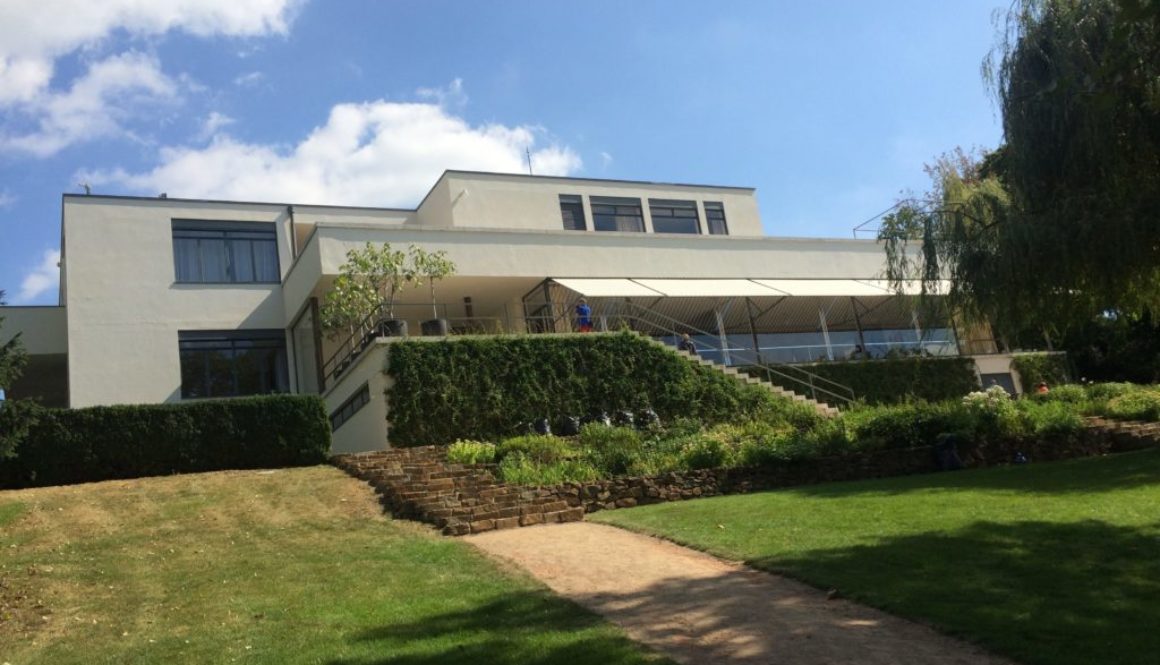
Tucked away in a quiet street in a well-off residential area up the hill just off the Brno town centre, you might easily pass by her minimalist front facade without noticing.
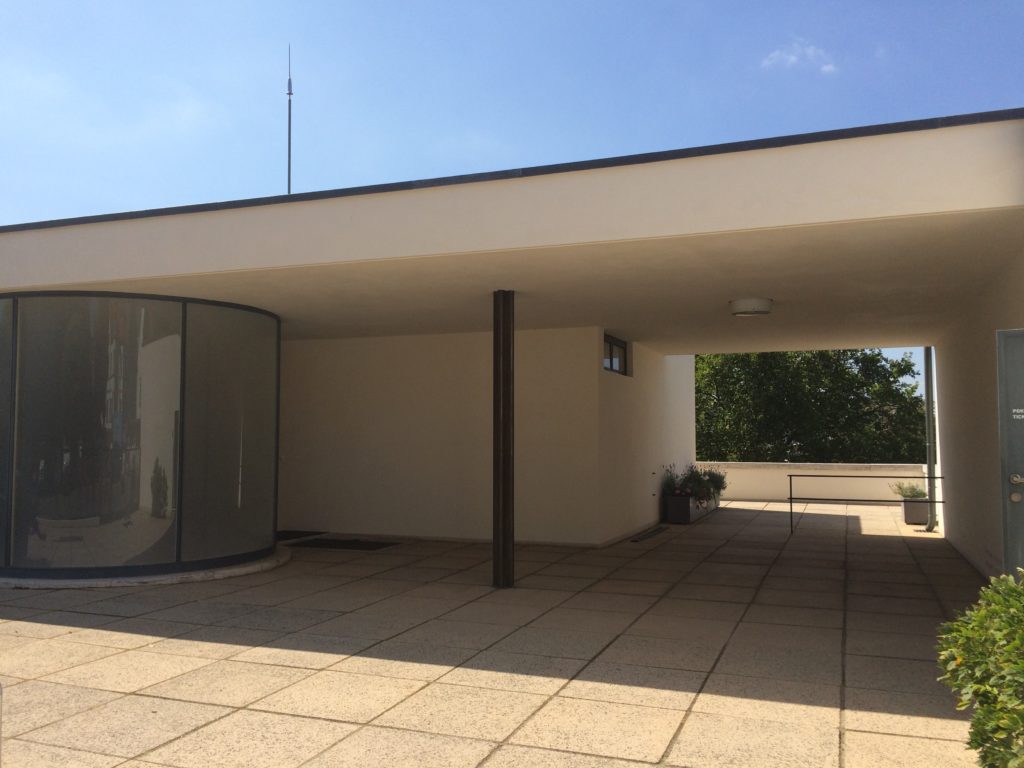
Villa Tugendhat. The glass house.
UNESCO protected masterpiece of modernist and functionalist architecture, built by Ludwig Mies van Der Rohe in the years 1929-1930 for the newly married couple Grete and Fritz Tugendhat.
Both Grete and Fritz came from affluent families of the so called textile barons, who prospered from then thriving textile manufacturing (in the 19th century, Brno used to be dubbed the Moravian Manchester). When they decided to build a family residence on the vast yet slopy plot Grete’s father gave them as a wedding gift, they commissioned the design to an architect whose work they were impressed with – Ludwig Mies van der Rohe. They granted him a limitless budget!
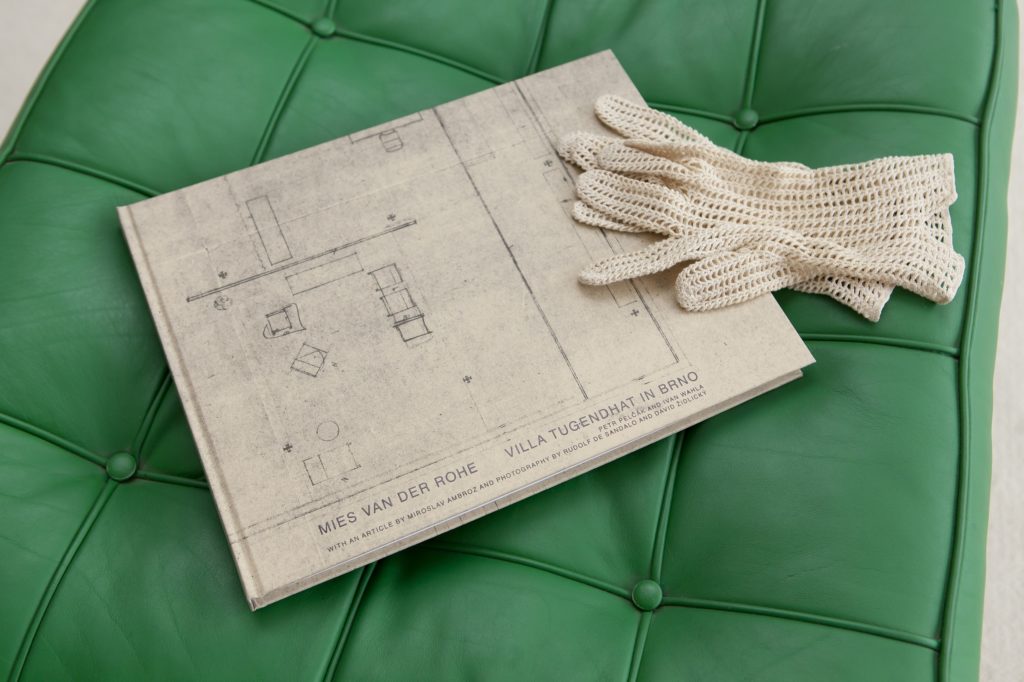
Our first visit to Villa Tugendhat was in 2010, and at that time, our focus was on its breakthrough architecture and design we’d read so much about. Despite dilapidation and damage caused by decades of neglect, and with missing inventory, we were captured by her timelessness, splendour and genius loci.
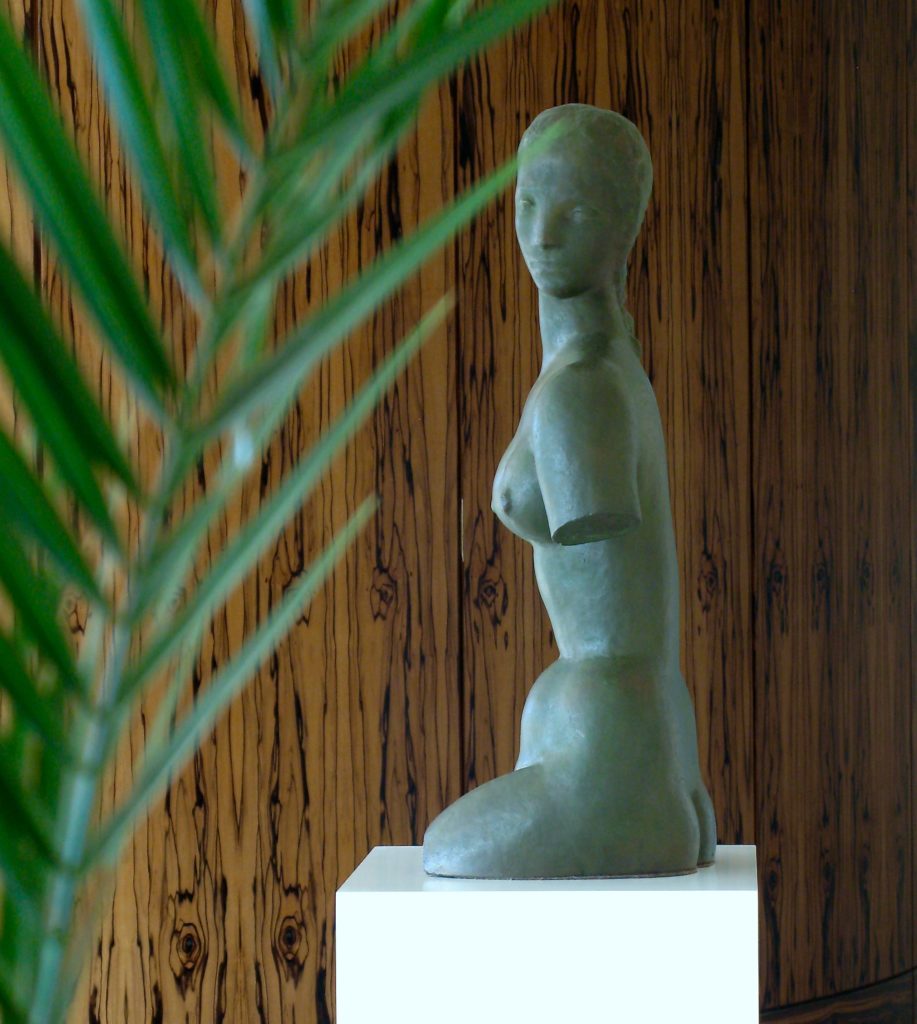
Villa Tugendhat is the model representation of Mies van der Rohe‘s ‚Less Is More‘ design principle, with its light and airy open plan, sparse use of furniture, specifically designed for the house, and no decorative objects whatsoever. Yet the space does not feel austere, due to the use of luxurious natural materials, such as yellow oxyx and exotic woods. The only piece of art chosen for the house was the ‚Torso‘ by Wilhelm Lehmbruck.
Perhaps the most iconic architectonic feature though, that also gave Villa Tugendhat its moniker – the glass house – is a glass wall on the facade overlooking the garden and offering panoramic views of the Brno skyline. Its massive glass panels slide into the basement, thus connecting the interior with the garden which was designed as an integral part of the living space.
To truly appreciate how radical and bold this architectonic concept must have been at that time, it’s worth visiting Villa Löw-Beer, within the walking distance, situated at the lower end of the very same plot and garden; it’s the house where Grete’s parents lived.
Quite unexpectedly, our first visit turned to be quite an emotional experience, too. We left moved and saddened. By the state this building was in. By the cataclysmic events that changed the lives of her commissioners forever.
The young Tugendhat family had mere eight years to enjoy their house. Being Jewish, they were forced to flee from Czechoslovakia in 1938, shortly before the country was torn apart as a result of the Munich Agreement, and occupied by the Nazis a year later. They never came back.
Villa Tugendhat has never been lived in again.
Instead, it became a poignant reflexion of the country’s historic turmoils: seized by the Gestapo in 1939, it served as a Messerschmidt office during the WWII, only to be looted by the Soviet Red Army after the liberation of Brno in 1945 (can you believe the Russians used its mahogany library as a horse stable?!). In the 1950s the villa became property of the national administration and served as a dance school and later as a rehabilitation and physio exercise centre. In the 1960s, the plans finally began for her restoration and use for cultural events. Yet another occupation, that of 1968 by the Soviet army, interrupted these plans and it was not until 1980s, after Villa Tugendhat became property of the Brno Municipality Council when plans for its restoration began anew. A major restoration and reconstruction project took place between 2010-2012.
Our second visit in August 2017 was much more light-hearted. At that time Villa Tugendhat was already brought back to her nearly original glory. It opened to the public, and became a distinct cultural and social venue. On a hot summer’s day, with the huge glass wall hid in the floor, the refreshingly breezy view from under the marquee felt almost like we were on a captains bridge.
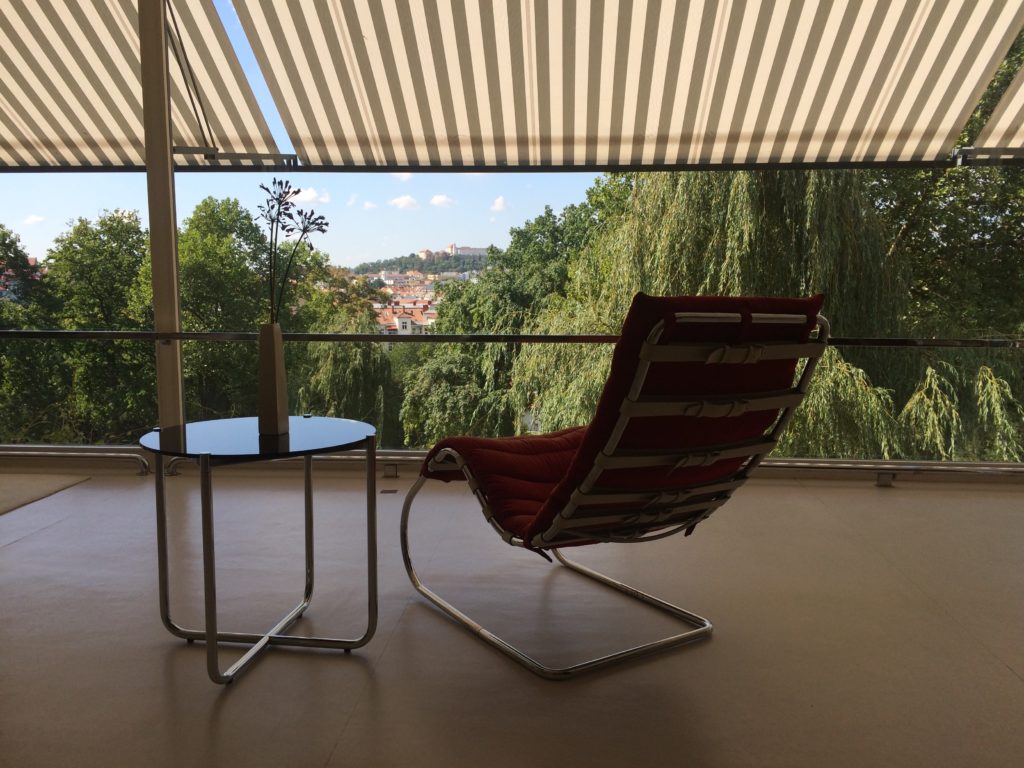
Only the statuette was missing. Returned to the Tugendhat family as a compensation to the victims of holocaust, only to be sold in an auction in London few months later. We will never see her again (although this is not entirely true; the original artwork has been replaced by rather a dissappointing copy).
Over the years and our multiple stays to Brno, our connection to the Villa Tugendhat became very personal.
So much so that for the third time around, we treated ourselves to a very special and private time in this iconic house. Our wedding day. It felt like for one single day in January 2018, Villa Tugendhat belonged to us (we even got the key!). Perhaps we experienced what it must have felt back then, when private social gatherings of family and friends frequently took place there.
Churchill’s Moravia
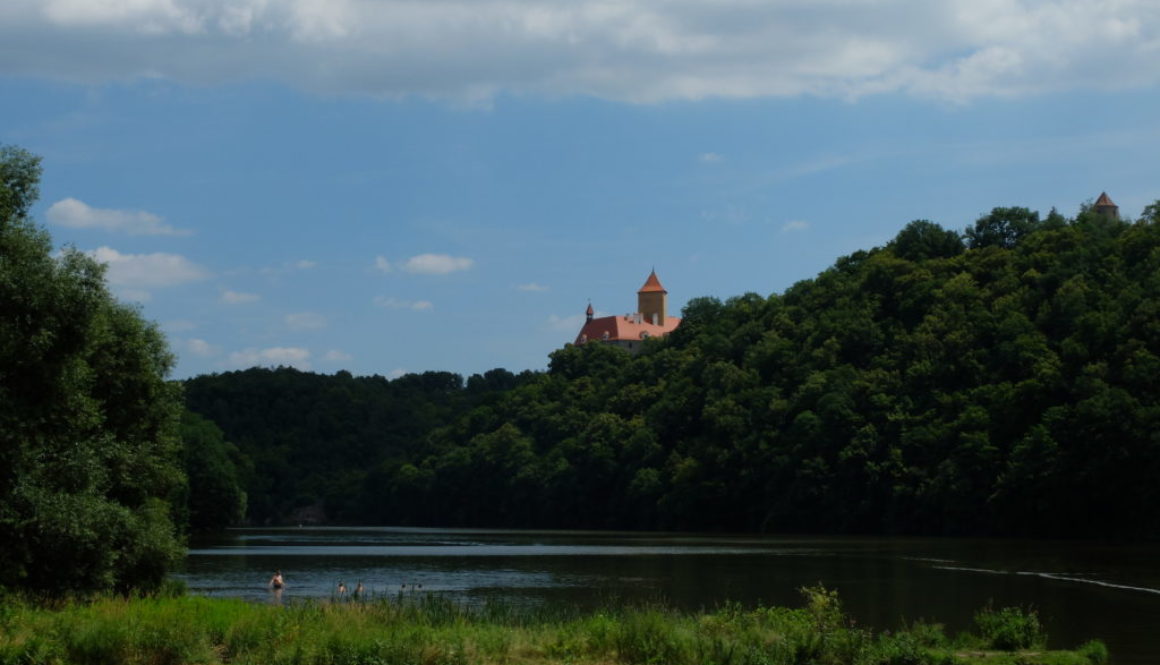
Built on the river Svratka in the late 1930s, Brno Dam served as a water reserve, a source of electric power and prevention from flooding. But mainly, it has always been a place of recreation, with its sandy and grassy beaches with easy access to water, sports, play and picnic areas, numerous walking trails alongside the lake and in the surrounding woods, hotels, restaurants, pensions and picturesque beer pubs, marina, yacht club as well as boat and water sports rental services. In cold winters the water surface freezes and the lake becomes one huge skating ring.
Various events take place throughout the year. Perhaps the most popular is Ignis Brunensis (Latin for Fire of Brno), an international festival and competition of fireworks shows. The effects of competing fireworks are intensified by reflections on the water. A local radio station broadcasts synchronized music. The festival takes place each year between mid-May and mid-June, attracting hundreds of thousands.
During the sailing season, the best way how to explore the area is by boat. And this is what we did – and it turned out to be the best way of spending a hot summer’s day. Starting at the Marina, twin-deck passenger boats depart every 45 minutes or so, zigzagging against the flow between the two sides of the lake and connecting all its major resorts. Sat on the top deck, we enjoyed the ever-changing scenery while soaking up the sun – beeches and resorts with typical summer buzz gradually gave place to much calmer forests and rocky reefs. It takes about an hour and half to get to the farther end of the lake.
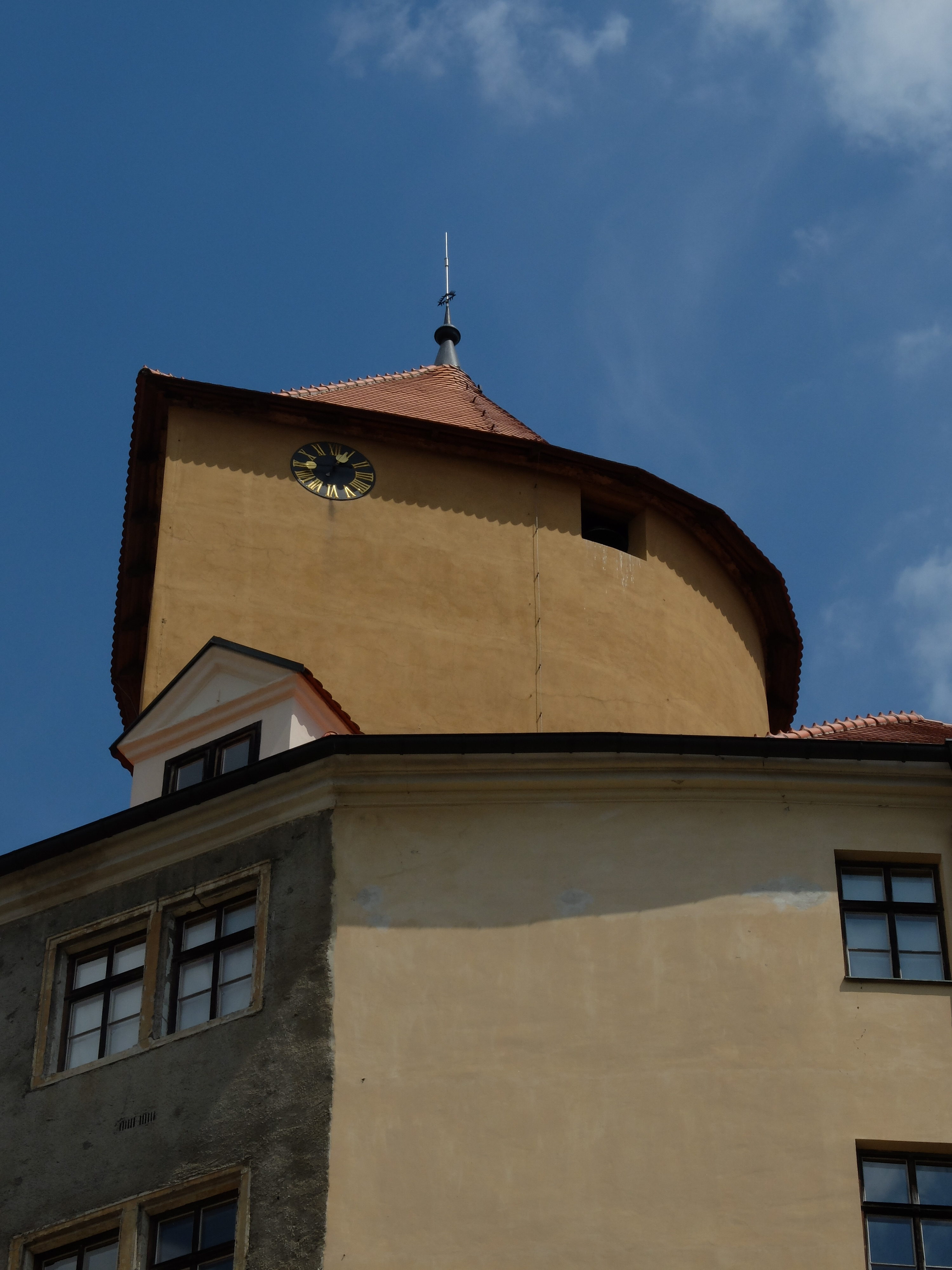 Without any doubt, the pinnacle of our trip was an ‘interlude’ visit to the Castle Veveří, perched just above the lake. It takes only a short walk from the boat stop up the hill, through the forest, and here we were. The royal Castle Veveří is one of the largest in Czechia. Legend has it that its foundations have been laid no later than 1059, although its existence has been evidenced in writing ‘only’ from 1213.
There are two possible origins of its name – it may be derived from the Czech word ‘veverka’ meaning squirrel as a reference to the abundance of wild game in the surrounding forests, or it may stem from an old-Bohemian word for faith ‘vera’.
The list of the castle’s past owners is a parade of European aristocratic houses. Its last noble owner was Baron Maurice de Forest, an early motor racing driver, aviator and liberal UK politician. And a close friend of Winston Churchill.
Baron de Forest and his family resided there until 1925, when he sold the castle and the surrounding estate to the newly established Czechoslovak state.
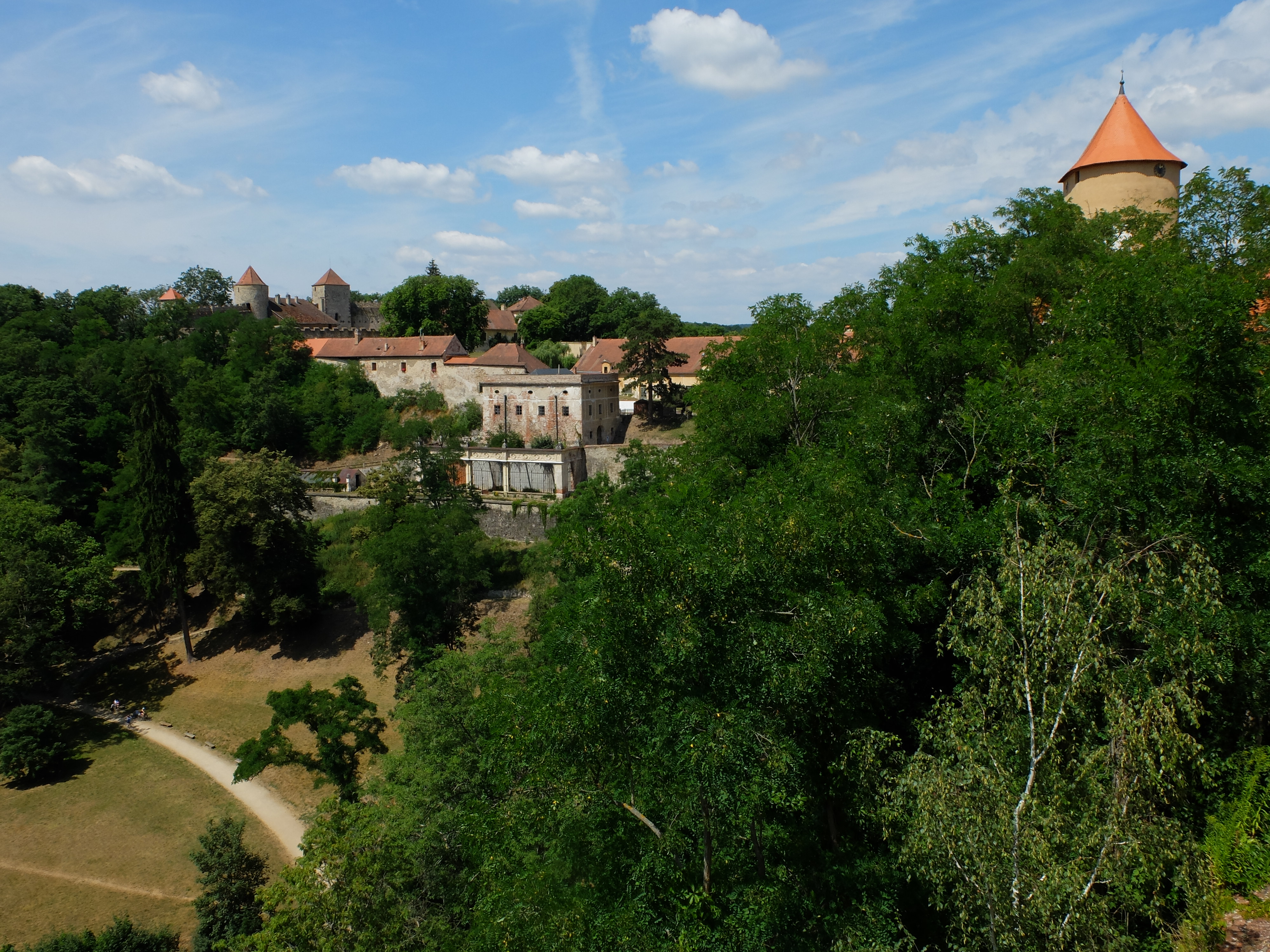
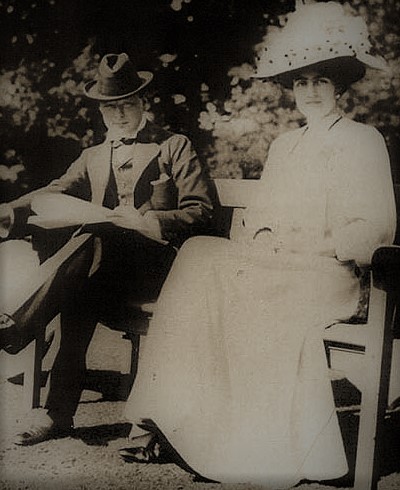
Churchill visited his friend Baron de Forest at Castle Veveří three times.
He must really have enjoyed his first two stays (most of which, it is reported, were spent hunting hares and pheasants), because for the third time, in 1908, he came together with his wife Clementine during their honeymoon tour around Europe, and they spent several days here.
The memory of Churchill’s visits is honoured by a plaque by a renowned Czech sculptor Otmar Oliva. It is placed in the entrance area just behind the gate to the inner castle.
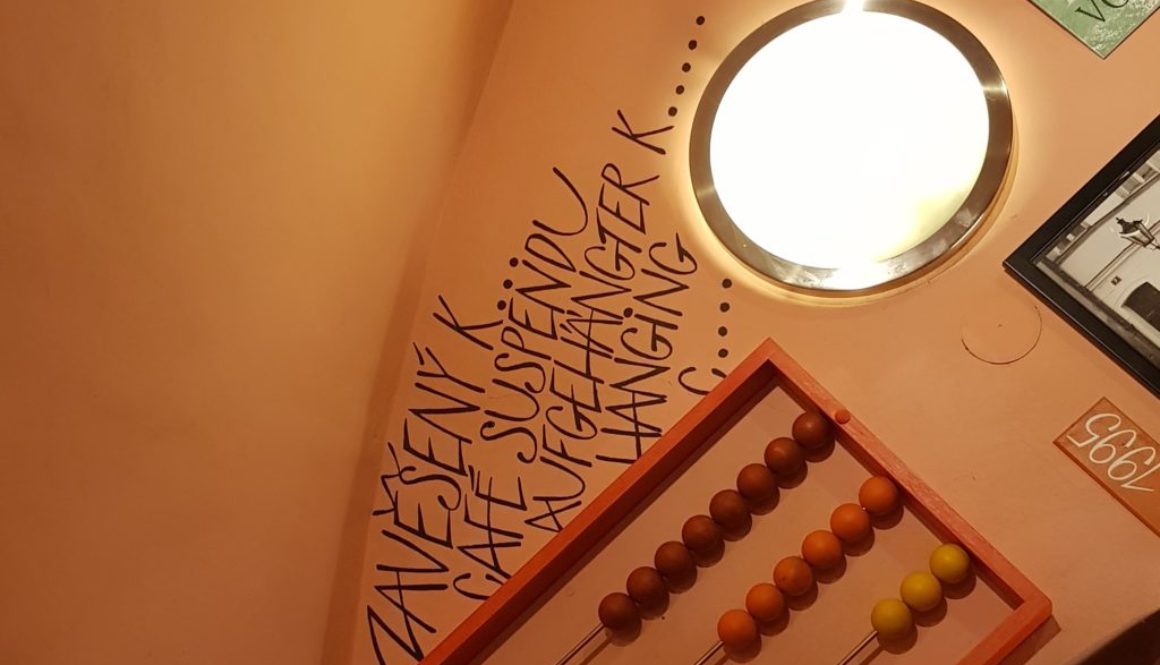
Hanging Coffee
A guy comes to a café, has a cup of coffee and says:
‘I’ll pay for two cups – the one I’ve just had and the other one I’ll leave hanging here.’
Another guy walks in, and, being broke, he asks:
‘Is there by any chance a hanging coffee here?’
And if there is, he drinks it and goes home.
Hanging Coffee is one of our favourite spots in Prague. You will find it under an arcade of a baroque palace at Loretánská street, just a couple of minutes walk up the Prague Castle.
It is a perfect retreat after explorations of the Prague Castle area, or after a visit to the nearby Strahov Monastery. The terrace offers stunning views of Petřín hill opposite, with skyline dominated by a viewing tower dubbed ‘the Eiffel Tower of Prague’.
The interior is a blend of ‘first republic’ nostalgia, literary café and pupeteer’s prop room. You will find yourself surrounded by their resident artist’s signature handwriting, drawings, prints and objects.
Over the years, we made it a habit to come here at least once whenever we are in Prague.
We enjoy hanging around here, having a cup of coffee and a cake perhaps, chatting, reading newspapers, people watching and savouring the moment.
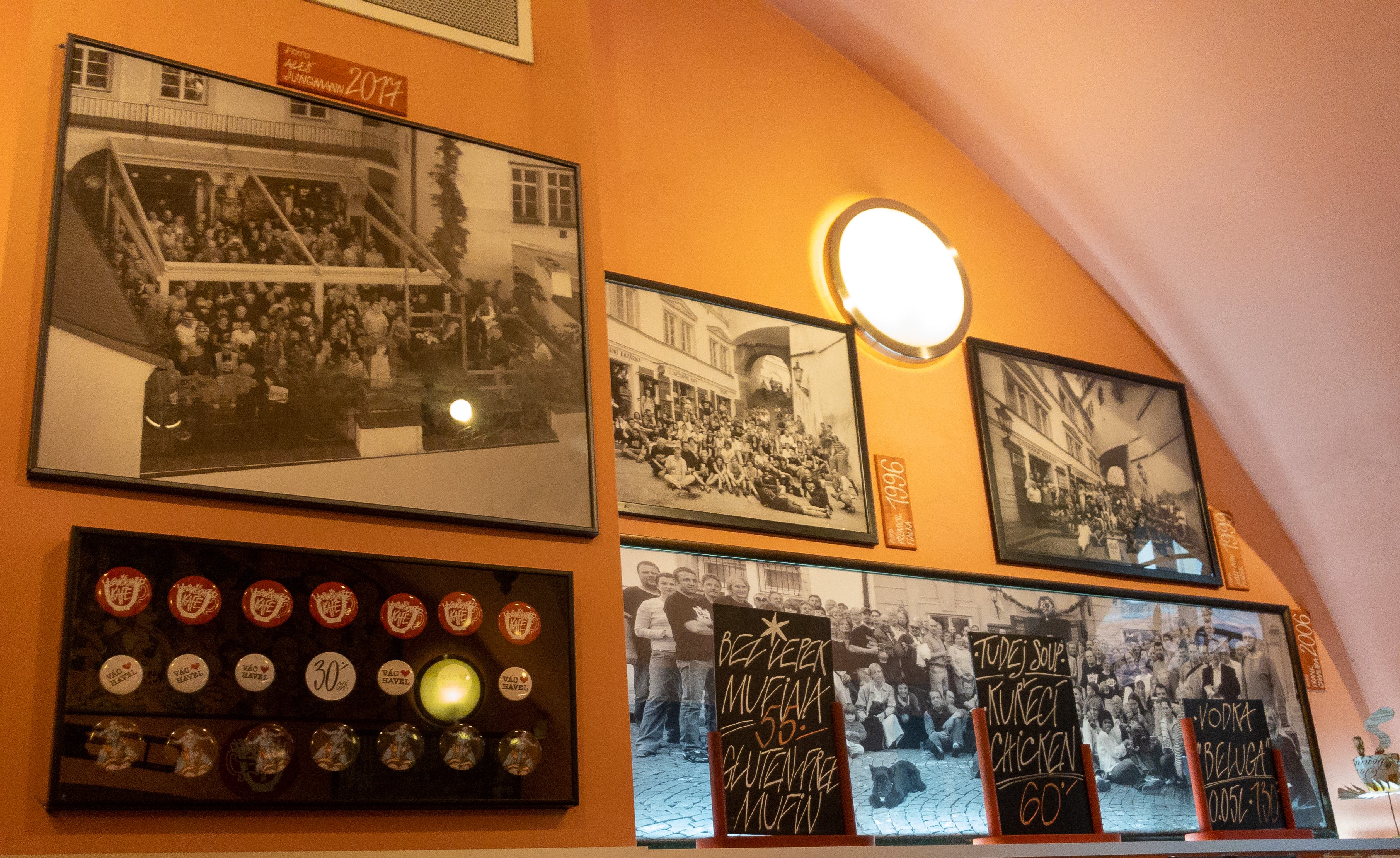
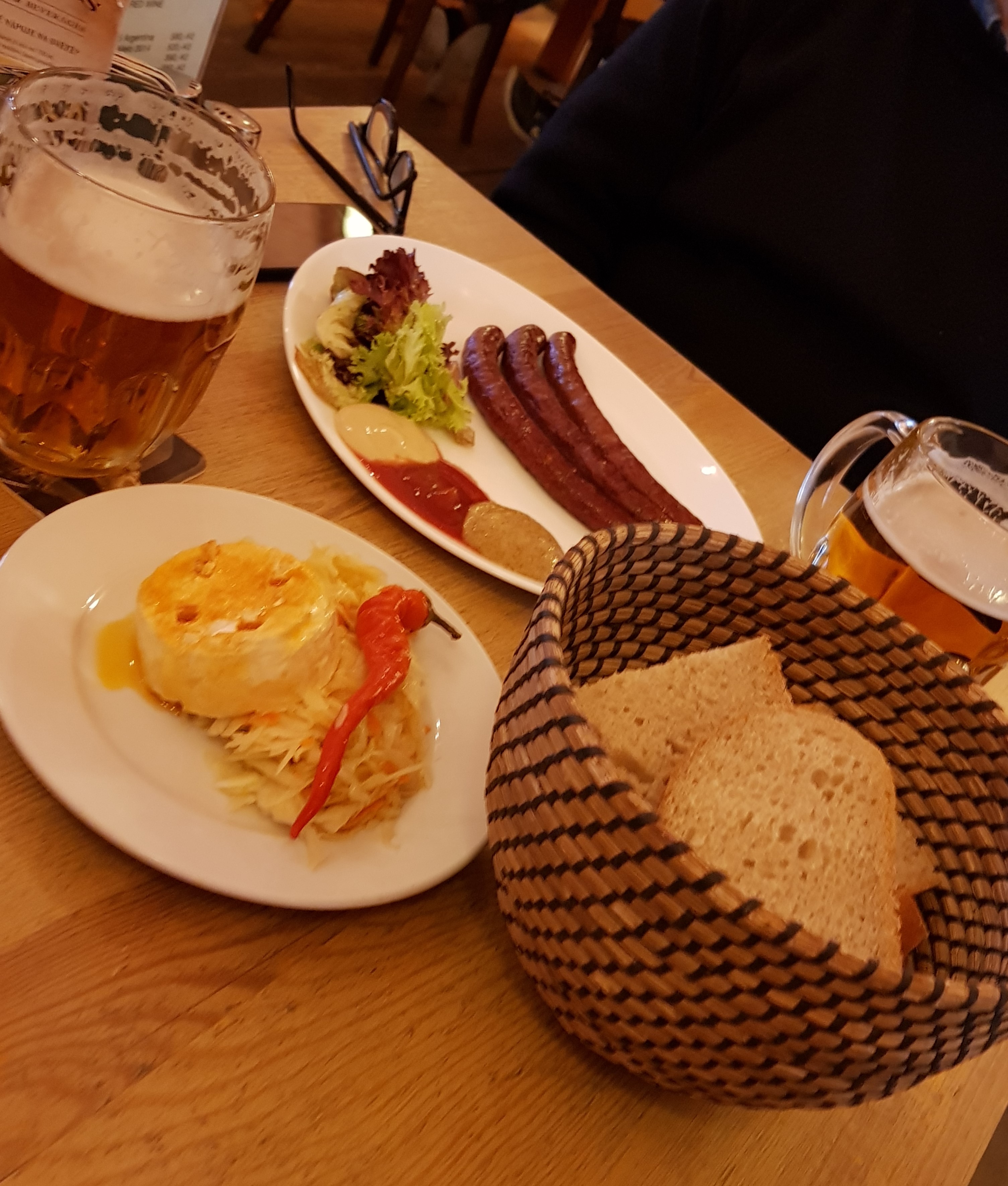 Most of the times though, we come for a pint or two (our favourite lager ‘Kozel’ is on tap) and some of their delectable nibbles. Forget crisps! Try some of the traditional Czech ‘beer snacks’ instead, such as pickled camembert, beer cheese, home-made pâté, beef sausages or marinated ‘drowned’ knackwurst.
There is always a ‘soup of the day’ on offer and their crêpes, with either sweet and savoury fillings, are already a legend. Icons of Czech cuisine, such as goulash, roast duck or roast sirloin in vegetable and cream sauce are on the menu too. That is if you are really really hungry.
And of course, the ultimate Czech beer-snack: steak tartare, spread on a slice of fried and garlicked rye bread!
But feasting aside.
Hanging Coffee is the cosiest, friendliest, most authentic and welcoming café we know. It is one of the reasons we love Prague.